Translation vs. Revision
Today there are countless ‘Bible Translations’. This phrase makes it seem that there are numerous different Bibles with different content. However, this is not the case.
All Bibles can be traced to ‘original’ language copies in Hebrew, Aramaic, and Greek. Latin became the dominant Bible language immediately after it was completed.
Those who change the language are properly called translators, while those who maintain the language but revise the text to correct perceived errors etc., are more properly called editors. As an example, Martin Luther edited the standard Latin Bible of the time, and produce his German translation.
There are very few publishers who produce new translations today; most are are simply edited revisions.
There is however, a trend to incorporate the Divine Name in some modern editions of the Bible, even in the New Testament where it is not found in the Geek text. There are three principle variations: Yahweh, Jehovah, and the Tetragrammaton.
Translating a Name
There are several ways to ‘translate’ a name from one language to another.
- Transliteration – convert the sounds of one language to the sound conveying characters of the target language. (Алексе́й in Russian Cyrillic script is Alexei, Alexey, or Aleksey in English.
- Transcription – if the same alphabet is used, the name may be spelled the same but pronounced differently. (Jean is spelled the same in French and English, but pronounced differently)
- Translation – use a word in the target language that has the same meaning. (White River in English becomes Rio Blanco in Spanish)
- Conventional Forms – some names have traditional equivalents. (Germany in English is Deutchland in German)
- Cultural Adaption – names can be given to fit cultural norms. (oriental students are often given common English names)
This leads to the question: how do you translate the Tetragrammaton into another language?
Since the original pronunciation is lost, there is no universally acceptable translation.
The Divine Name
This brief introduction will examine when and how the Divine Name was reintroduced into the modern Bible. This topic should not arise since the Divine Name is found in ancient Bible manuscripts but it was deliberately removed from from early translations, such as the Greek Septuagint, and reintroduced in some later ones.
With the exception of the Hebrew Bible, the Divine Name appears as the Tetragrammaton in relatively few places in the archeological record. One of the oldest examples is on the Mesha Stele or Moabite Stone dated to about 840 BCE where it is written in Phoenician characters. These gradually evolved into the modern Hebrew characters. Notice that the name was not translated, but only transliterated. This was the standard practice for well over over two millennia.

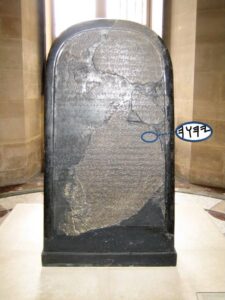

The Tetragrammaton in the Hebrew script has evolved throughout the ages.

Another collection of artifacts containing the Tetragrammaton are the Lachish Letters written about 587 BCE. They are brief notes preserved on pottery shards.
The Divine Name appears thousands of times as the Tetragrammaton in Hebrew copies of the Old Testament. In English, these letters correspond to YHWH. It should be noted that the Hebrew and English letters are reversed from each other since Hebrew is written from right to left.
The written Hebrew language consists only of consonants. Therefore, we are entirely dependant on Hebrew speakers to determine how words should be pronounced. Today there are two common ways to make the Divine Name pronounceable, either as Jehovah or as Yahweh. Clearly the latter uses the transliterated letters and is likely more correct.
According to Jewish tradition, the Hebrews eventually stopped pronouncing the Divine Name sometime around the exile in Babylon and would vocalize Adonai (Lord) instead. They also used the word Elohim (God), but this could also refer to other gods.
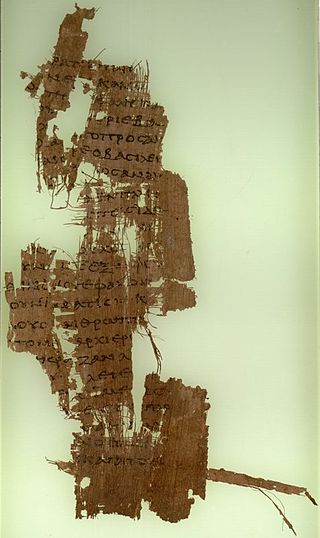
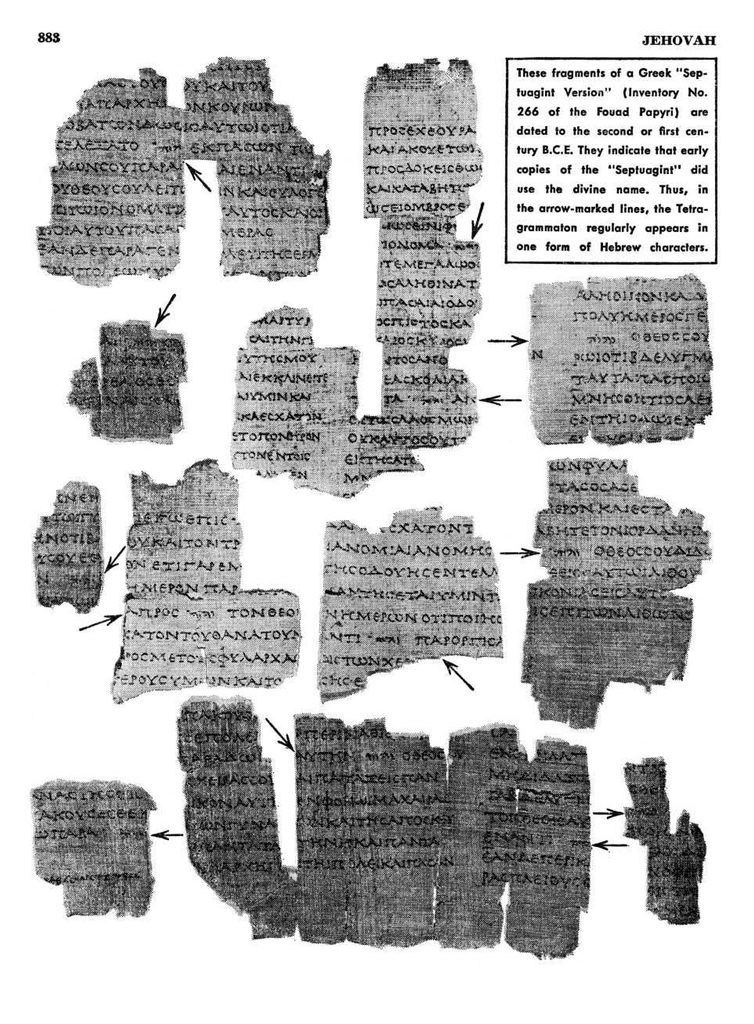
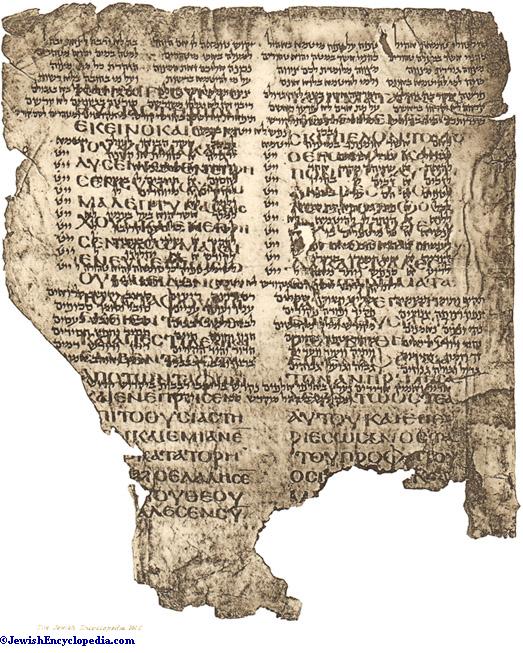
In the Greek Septuagint, the tetragrammaton was replaced by Kurios (Lord) and Theos (God). However, there are fragments of the Greek Septuagint which do contain the Hebrew characters to represent the Divine Name.
It should be noted that the ‘correct’ pronunciation of the Divine Name has never been of concern as the Hebrew writers seem to have made no attempt to preserve it.
To make the Divine Name pronounceable in other languages, the vowel points later introduced into Hebrew, were placed between the consonants of the Tetragrammaton.
The first time that the Tetragrammaton was ‘translated’ into another language appears to be in 1278 CE. The work Pugio Fidei by Raymundus Martini used Yohoua. Eventually, in 1530, William Tyndale introduced it into English as Iehouah.
Ancient Manuscripts & Fragments
There are thousands of ancient Biblical texts and fragments found in libraries and museums around the world. The majority of these are written in Hebrew and contain the Tetragrammaton.


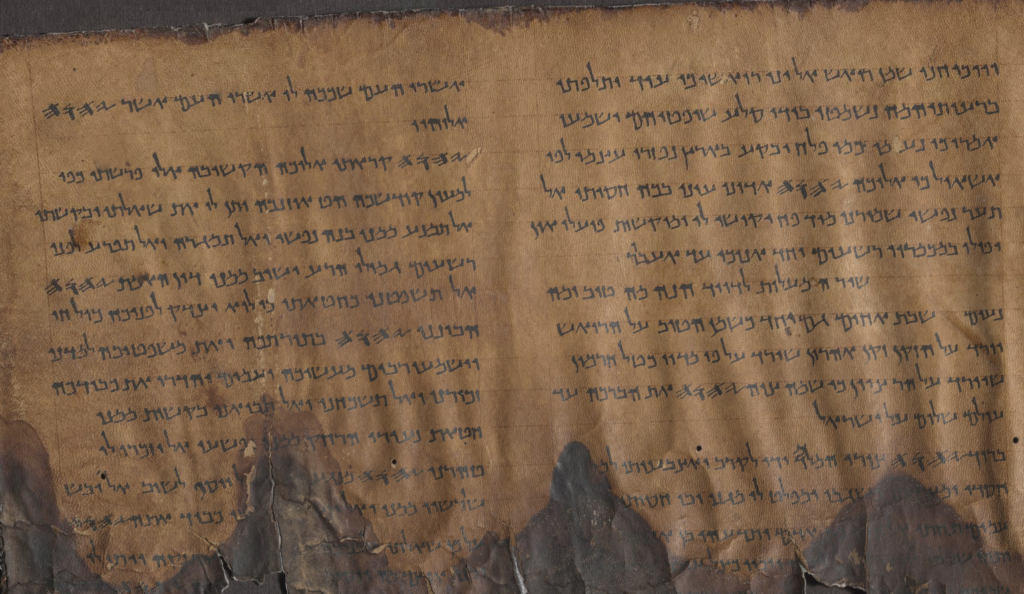
There are a few fragments of the Greek Septuagint older than the NT.


| Manuscript | Date | Comments |
|---|---|---|
| Dead Sea Scrolls | 3rd century BCE to 1st century CE | These are the most important ancient Bible manuscripts in existence and are in Hebrew. The Great Psalms scroll has the Tetragrammaton in an older script. The Great Isaiah scroll is the oldest copy of this book. |
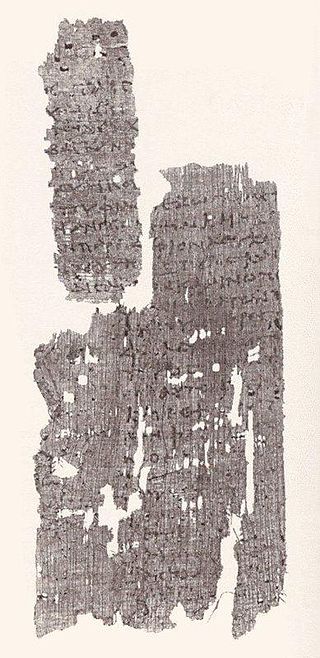
| Papyrus Rylands 458 | 3rd century BCE to 1st century CE | These fragments are written in Greek. |
| Greek Minor Prophets Scroll | 50BCE – 50CE | These fragments are written in Greek. |
Early NT Manuscripts & Fragments
There are thousands of early New Testament texts and fragments found in libraries and museums around the world.
- List of New Testament Papyri – Wikipedia
- The Earliest New Testament Manuscripts – Bible Archeological Report
- New Testament Manuscripts

_fol._1r.jpg)
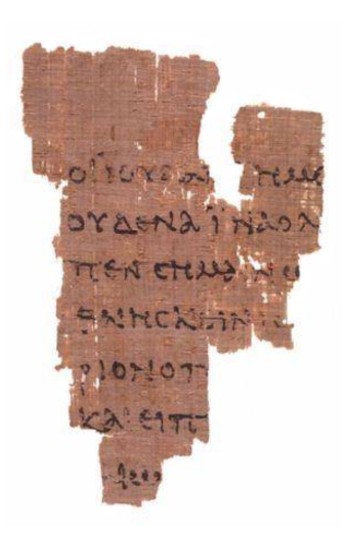
None of these contain the Divine Name.
| Manuscript | Date | Comments |
|---|---|---|
| Chester Beatty Papyri | 3rd century CE | These are in Greek and contain fragments of the Old and New Testaments |
| Dishna Papers (Bodmer Papyri) | ~200CE + | The oldest document is P66 which is the Gospel of John. |
Biblia Hebraica
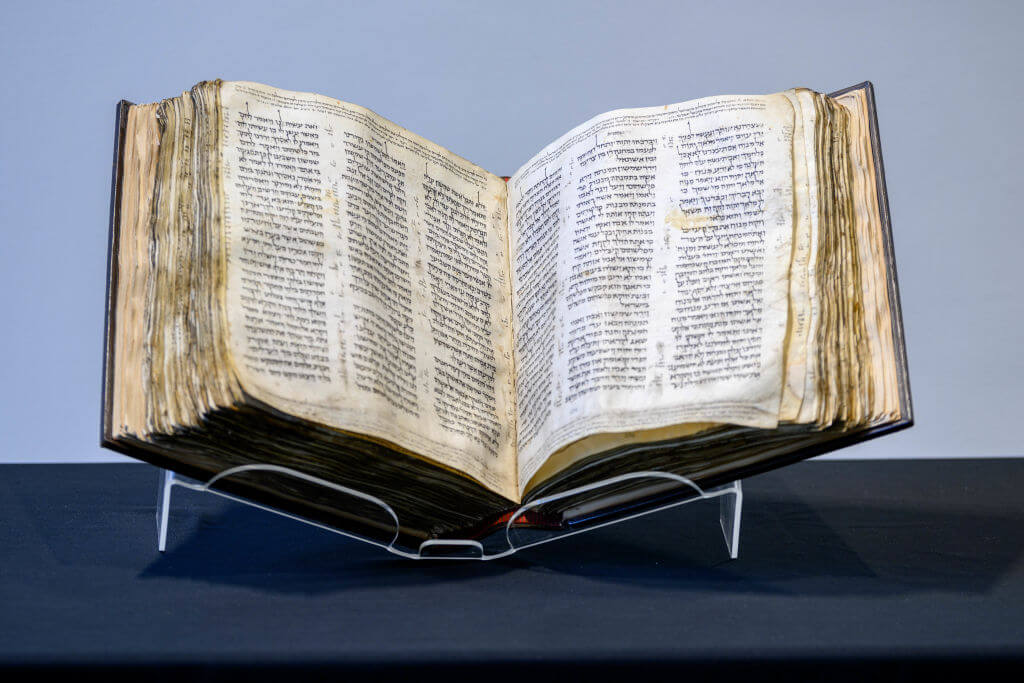
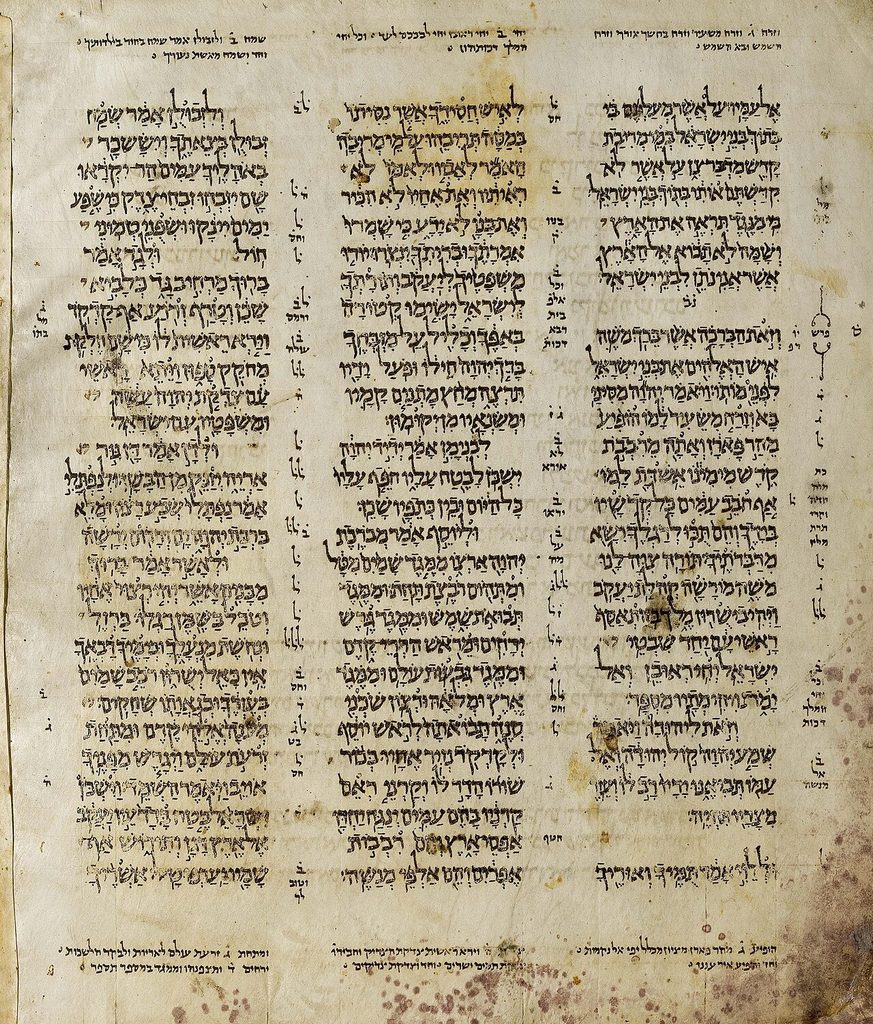
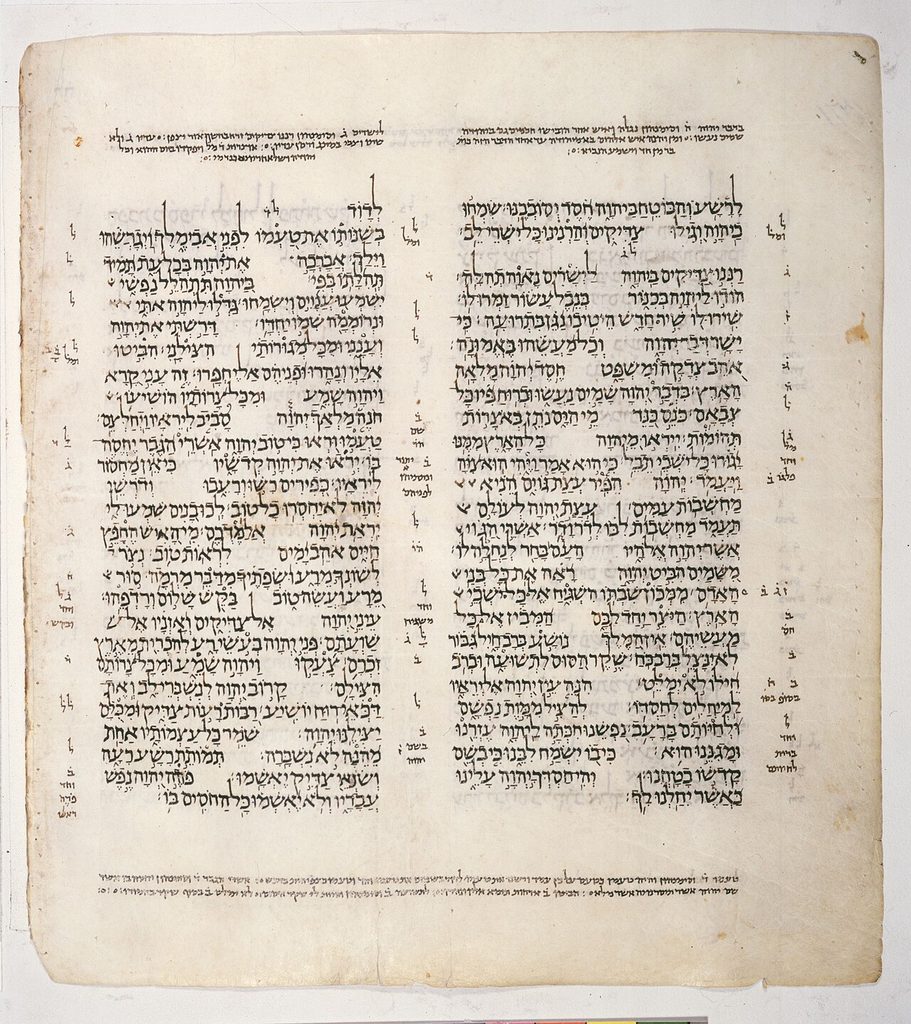
For more than a thousand years, the Hebrew Bible was transcribed by hand. By comparing the principle manuscripts and thousands of fragment we discover that it has come down to the modern day essentially unchanged. There certainly are numerous variations associated with linguistic changes and scribal errors, but nevertheless it is virtually unaltered.
| Hebrew Codices | Date | Comments |
|---|---|---|
| Dead Sea Scrolls | 3rd century BCE to 1st century CE | |
| Aleppo Codex | ~920CE | 20% of it is missing. |
| Codex Sassoon | 10th century CE. | This Masoretic codex contains all 25 books of the Hebrew Bible |
| Leningrad Codex | ~1008CE | This is the oldest complete text of the Hebrew Bible. |
| Codex Cairensis | 9th – 11th century CE | |
| Codex Orientales | 9th – 10th century CE | |
| Damascus Pentateuch | 10th century CE |
Some time in the 16th or 17th century, the ‘modern’ Biblia Hebraica was produced.
| Biblia Hebraica | Comments |
|---|---|
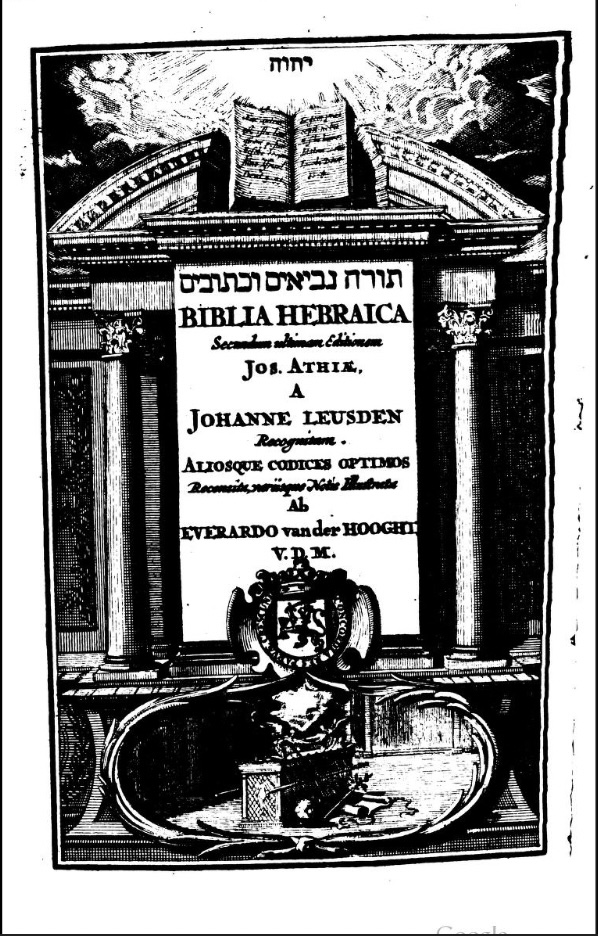
| Johannes Leusden | 1667 CE. It was the first printed version which numbered the scriptures. |
| Everardi van der Hooght | 1705 CE. His Biblia Hebraica was based on Leusden’s work and became the standard text during the 18th and 19th centuries. |
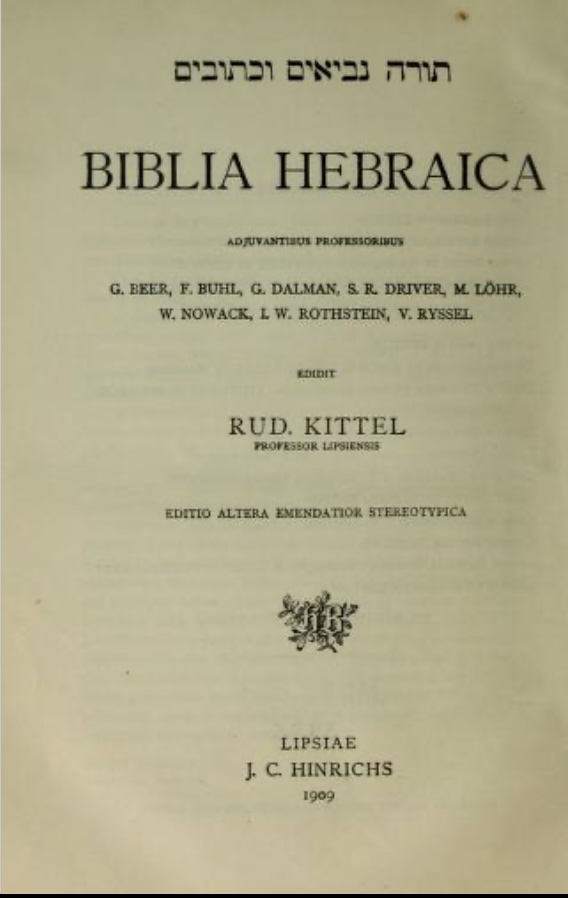
| Kittel’s Biblia Hebraica | Three editions of this work were produced between 1901 and 1937. |
| Biblia Hebraica Stuttgartensia | Produced between 1968 to 1976. |
| Biblia Hebraica Quinta | This work started in 2004 and will be completed sometime after 2024. |

Loss of the Divine Name
The Divine Name was commonly used when the Old Testament was originally written. However, during the second temple period, it was rarely spoken as it was considered too sacred for ‘uneducated jews’ to pronounce. This had a profound effect on later Hebrew Bible translations.
Since the written Hebrew language does not contain vowels, the original pronunciation of the Tetragrammaton was lost.
After Alexander the Great’s conquest of the Mediterranean region, Greek was adopted as the international language of commerce and scholarship. Since the Hebrew language was in decline because of the Jewish diaspora, the Biblia Hebraica was translated into Greek and is now known as the Greek Septuagint.
All of the god’s names were translated into Greek in the Septuagint, except the Tetragrammaton which was replaced by Kyrios (Lord). This practice is still common in many modern Bible translations.
The Masoretes added vowel points to the Tetragrammaton. Unfortunately, these were not to aid in pronouncing the Divine Name. Instead, these were to remind the reader to say Adonai or Elohim as a replacement for the Divine Name.
Consequently, translators initially transliterated the letters of the Tetragrammaton and later added the Masoretic vowel points.
There are some fragments of the Septuagint which left the Tetragrammaton in Hebrew characters. One example of this is Papyrus Fouad 266 dated to the 1st century BCE. and held by the Société Royale de Papyrologie, in Cairo.
The Hebrew Bible has been continuously edited for centuries. It is not correct to refer to each as a unique translation as they all follow the same guiding principles, namely to provide the best authentic rendering of the original in the original language. Each editor identifies minor corrections in spelling or alternate renderings as new documents come to light. They also provide explanatory notes to elaborate on any variations or explain idioms.
Occasional editing is required since these were hand copied. Consequently spelling mistakes, missing words, changes in language, all caused minor variations.
Translators are left with three possibilities for the Divine Name:
- transliteration
- phonetic adaption
- replacement
Unfortunately, most Bibles use a replacement.
Greek
After Alexander the Great conquered the Near East, Greek became the de facto language of the region. It was only natural that the OT should be translated into Greek since it became an international language and the Jews were scattered throughout the empire. This was possibly the first time that the OT was completely translated into another language. This occurred sometime in the 3rd century and came to be known as the Greek Septuagint.
Greek Septuagint
The second part of the Bible (New Testament) was essentially written in Greek and is often called the Greek Scriptures, not to be confused with the earlier Greek Septuagint (of the Hebrew Scriptures). However, there are some fragments of the NT which show that at least some of it was written in Hebrew.
| Greek Codices | Comments |
|---|---|
| Codex Sinaiticus | 4th century CE. Contains most of the Greek Old and New Testaments. Most of this text is in the British Library. |
| Codex Vaticanus | 4th century CE. Contains most of the Greek Old and New Testaments. This text is in the Vatican Library. |
| Codex Alexandrinus | 5th century CE. Contains most of the Greek Old and New Testaments. It is located in the British Library. |
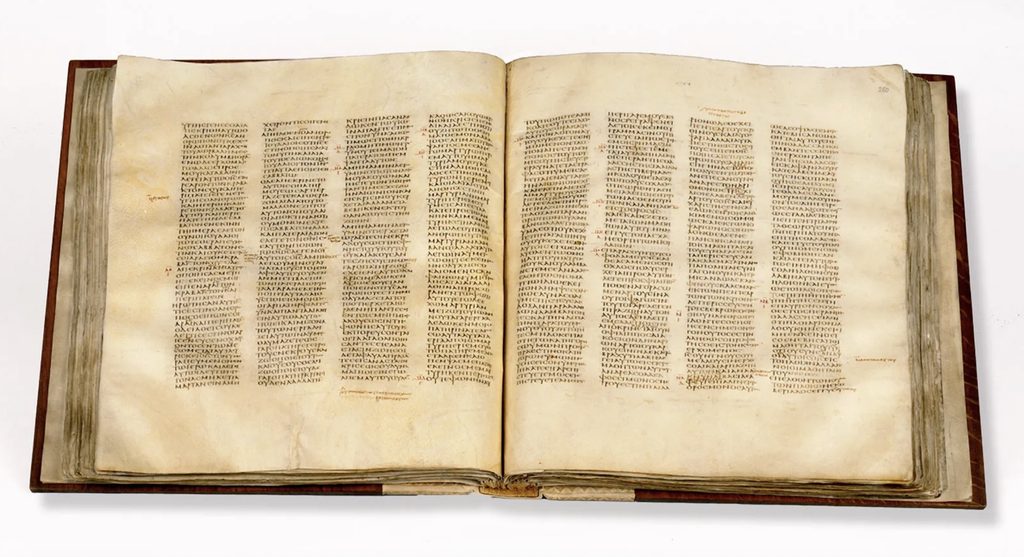
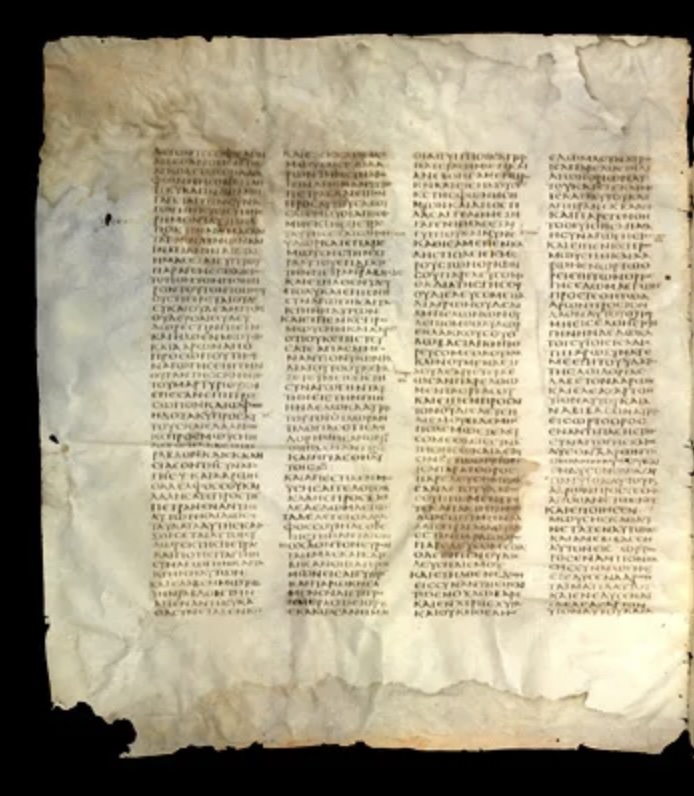

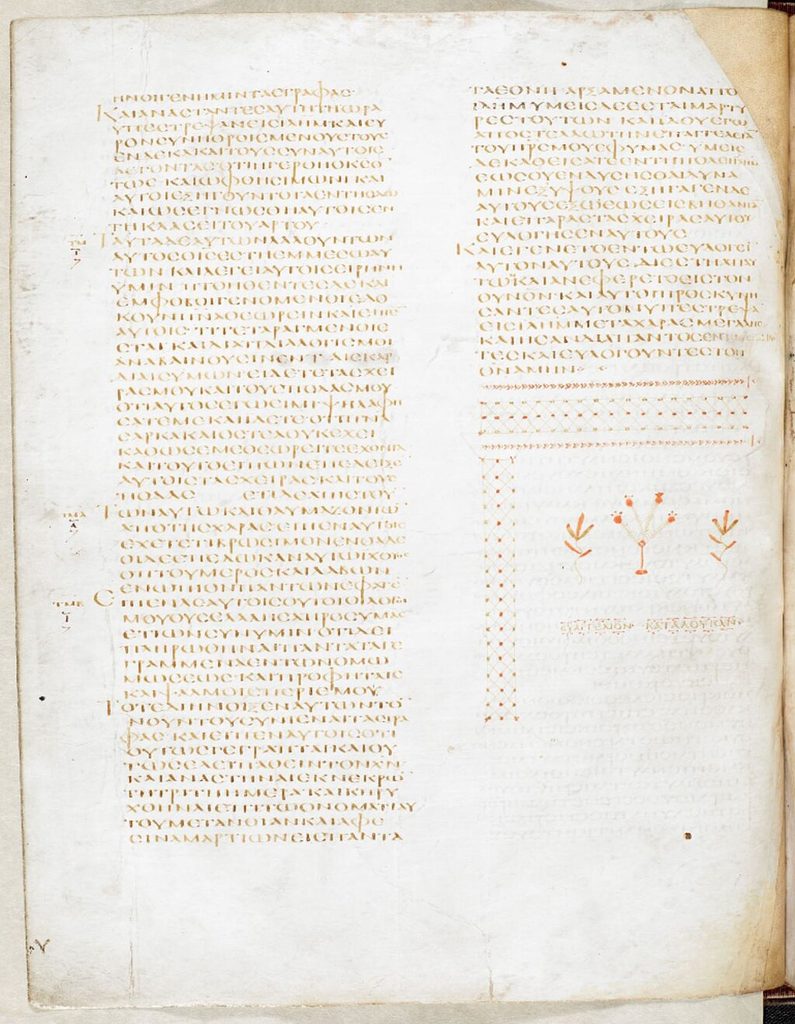
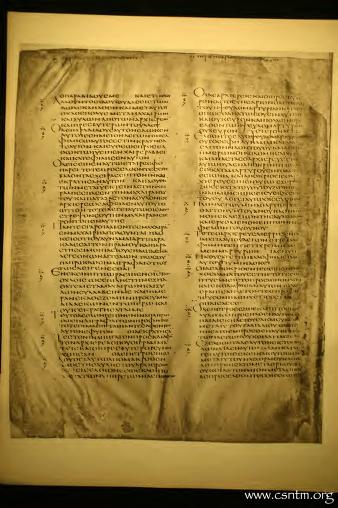
There are some fragments of the Greek Septuagint or early Greek translations which do contain the Tetragrammaton.
| Greek Fragments | Comments |
|---|---|
| Papyrus Fouad 266 | 1st century BCE. Contains portions of Deuteronomy. Contains the Tetragrammaton in paleo-Hebrew script. |
| Papyrus Rylands 458 | 2nd century BCE. Contains portions of Deuteronomy. Contains the Tetragrammaton in paleo-Hebrew script. |
| 8HevXII gr | Between 1st century BCE and 1st century CE Part of the Minor Prophets and contains the Tetragrammaton in paleo-Hebrew script. |
| 4Q120 | Between 1st century BCE and 1st century CE. Uses the transcription 𝚰𝚨𝛀 for the Divine Name. |
| Aquila’s Greek Translation | 2nd century CE. Contains the Tetragrammaton in square Hebrew script. |


Modern Greek Manuscripts
| Bible | Translator/Editor | Comments |
|---|---|---|
| 1516 Novum Instrumentum Omne | Erasmus 1466 – 1536 | Erasmus went back to the Koine Greek texts of the New Testament and produced a new Greek edition. He then translated this into Latin, which became the basis for the Textus Receptus. This was widely used by later Protestant scholars. |
| 1518 Aldine Bible | Andreas & Federicus Asolanus | The first complete Bible printed in Greek |
| 1587 Roman Sixtine Septuagint | Commissioned by Pope Sixtus V and based on the Codex Vaticanus. It became the standard Septuagint for the next 300 years. | |
| 1935 Septuaginta | Alfred Rahlfs | The prevalent modern version. |
Latin
Although the Mediterranean region was part of the Roman empire during the 1st century CE., Latin did not become the dominant language of the church and scholarship until some time in the 3rd century CE. at which time the Bible was translated into Latin.
It is believed that the Tetragrammaton wasn’t translated into a Latin proper name until the 13th century. The spelling varied somewhat in the various editions. The standard Latin Bible for centuries was that of Jerome. Although he used the Biblia Hebraica for his translation of the Old Testament, he made no effort to translate the Divine Name.
| Divine Name | Author | Date | Book |
|---|---|---|---|
| Yohoua | Raymundus Martini | 1278 CE | Pugio Fidei |
| Iohouah | Porchetus de Salvatici | 1303 CE | Victoria Porcheti adversus impios Hebraeos |
| Iehoua | Petrus Galatinus | 1518 CE | De Arcanis Catholicae Veritatis |

Early Latin Bibles
| Bible | Translator/Editor | Comment |
|---|---|---|
| Vetus Latina | There are no complete copies of the oldest Latin Bibles, however, about 80 fragments dating from the 4th to 13th centuries CE.are scattered throughout Europe’s libraries | |
| Vulgate | Jerome | Written in the 4th century CE. by Jerome. It contains most of the Greek Old and New Testaments. Most of this text is in the British Library. |
| Codex Grandior | Cassiodorus | 6th century. No longer exists |
| Codex Amiatinus | Jerome | 700 CE. This is the oldest complete copy of Jerome’s Vulgate |
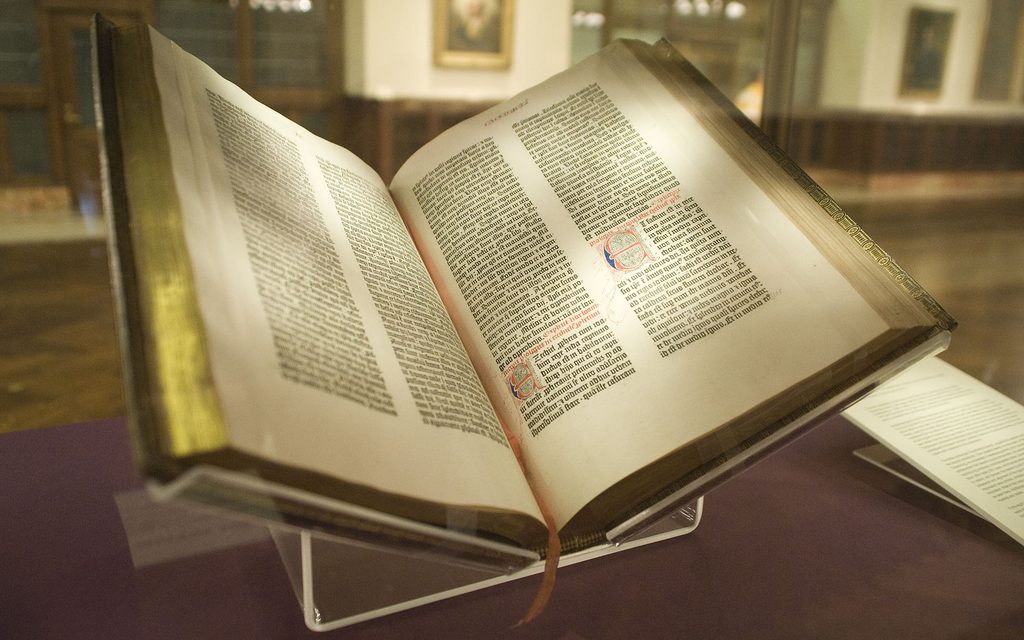
| Gutenberg Bible | Jerome | 1456 This was the first printed Bible and was the current edition of Jerome’s Vulgate. |
14th Century
The 14th century saw one of the most significant events in the modern history of the Bible, namely; the translation of the Bible into a major European Language.
John Wycliffe (~1328 – 1384)
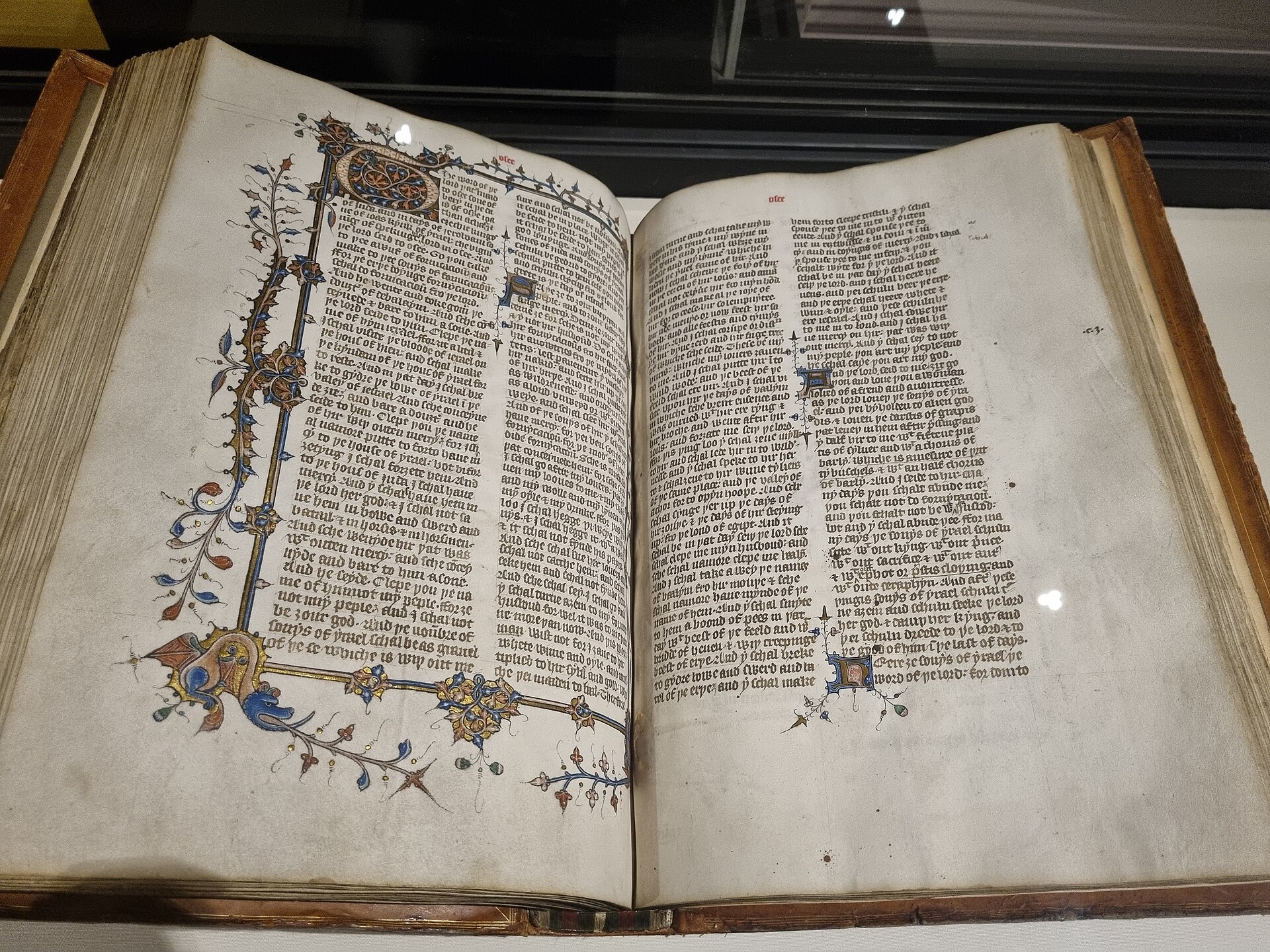
Translating the Bible into English was a very dangerous occupation in the 14th century. John Wycliffe and his associates, produced the first English Bible in manuscript form during the 1380’s. Parts of it weren’t printed until 1731.
Decades after his death in 1384, he was declared a heretic, his body exhumed, burned, and ashes scattered.
There were two versions of the Wycliffe Bible:
- 1382 A literal translation of the Latin Vulgate.
- 1395 A more idiomatic translation possibly edited by John Purvey.
Since Wycliffe started with Jerome’s Latin translation, he did not attempt to translate the Tetragrammaton. He continues to use Dominus (Lord) and Deus (God).
There was no attempt to reproduce the vocalization of the Divine Name.
1328 – 1384 This is the first complete English Bible in manuscript and did not use the Divine Name.
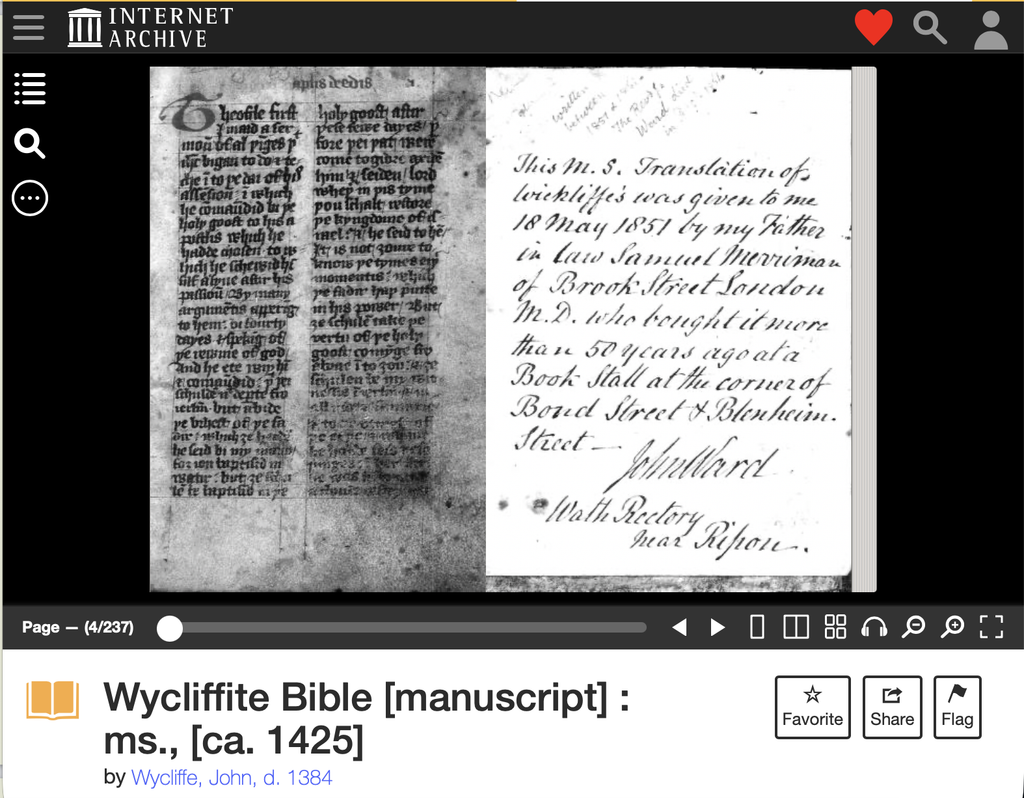
Wycliffe 1425
WikiSource (both versions)
CrossWire Bible Society
Textus Receptus 1382 Version
Textus Receptus 1395 Version
15th Century
With the advent of the printing press came the desire to mass produce the Bible. The initial language chosen was naturally Latin since it was the language of the church, science, and higher education. However, since the Bible was already being translated into other languages, it wasn’t long before it was being printed for the benefit of people in general.
Nicholas of Cusa (~1428)
Nicholas of Cusa used several Latinized forms of the Divine Name, including Iehoua, Iehova, Ihehoua, and Ieoa. An early-15th-century codex associated with him is specifically described as one of the oldest surviving documents in which the Tetragrammaton was rendered “Iehoua.”
Gutenberg Bible (1456)
The Gutenberg Bible is Jerome’s Latin translation of the entire Bible. This seminal work started a revolution in Bible publishing. It does not use the Divine Name.


16th Century
The official Bible of the Catholic Church is the Latin Vulgate. Jerome’s 4th century translation has been revised a number of times but does not use the Divine Name.
According to John Lenhart, there were hundreds of Latin translation of the Bible during this period. He references Andreas Gottlieb Masch who apparently describes some 8000 translations in several languages between 1450 – 1778 in his Bibliotheca Sacra. (unconfirmed)
Another useful source of information is the Oxford Handbook of the Latin Bible.
Protestant translators during the Reformation in the 16th century, preferred to use the Hebrew and Greek copies of the Bible rather than rely on Jerome’s Latin translation. As a result, variations of the Divine Name were reintroduced into the Old Testament, in Latin and some European languages after an absence of a few hundred years.
| Date | Language | Comments |
|---|---|---|
| 1455 | Latin | Gutenberg printed the first copy with movable type. |
| 1520 | Hebrew, Greek, Latin | Complutensian Polyglot – The first printed polyglot bible. In Greek, Hebrew |
| 1519 – 1605 | Latin | Theodore Beza produced 5 editions of the New Testament in Latin. Internet Archive Internet Archive |
| 1526 | Hebrew | Sebastian Münster (1488 – 1552) produced a Hebrew grammar |
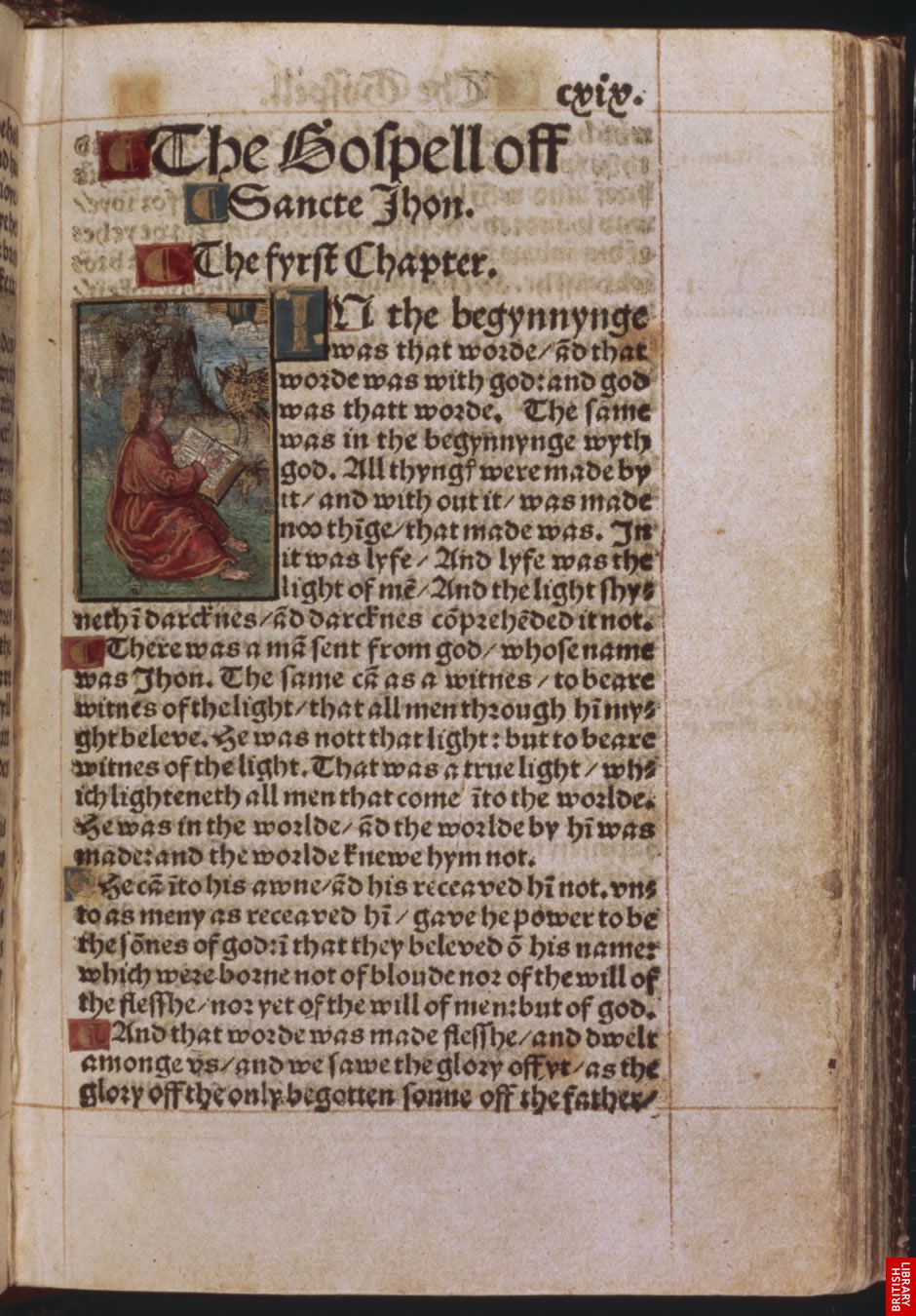
| 1526 | English | Tyndale Bible – Tyndale used the Divine Name Iehouah perhaps 9 times. In the forward to his 1530 Pentateuch, he wrote that LORD was Iehouah. Bible Study Tools (OT & NT) Textus Receptus (New Testament) Wesley Center (OT & NT) WikiSource |
| 1527 | Latin | Johan Rüdel His Biblia Sacra is considered the first Protestant Bible in Latin. |
| 1534 | Hebrew, Latin | Sebastian Münster (1488 – 1552 )His Hebrew/Latin translation occasionally used Iehova. He also referenced it in the New Testament. National Library of Isreal Grokipedia |
| 1534 | German | Luther’s Bible – This Bible did not use the Divine Name. |
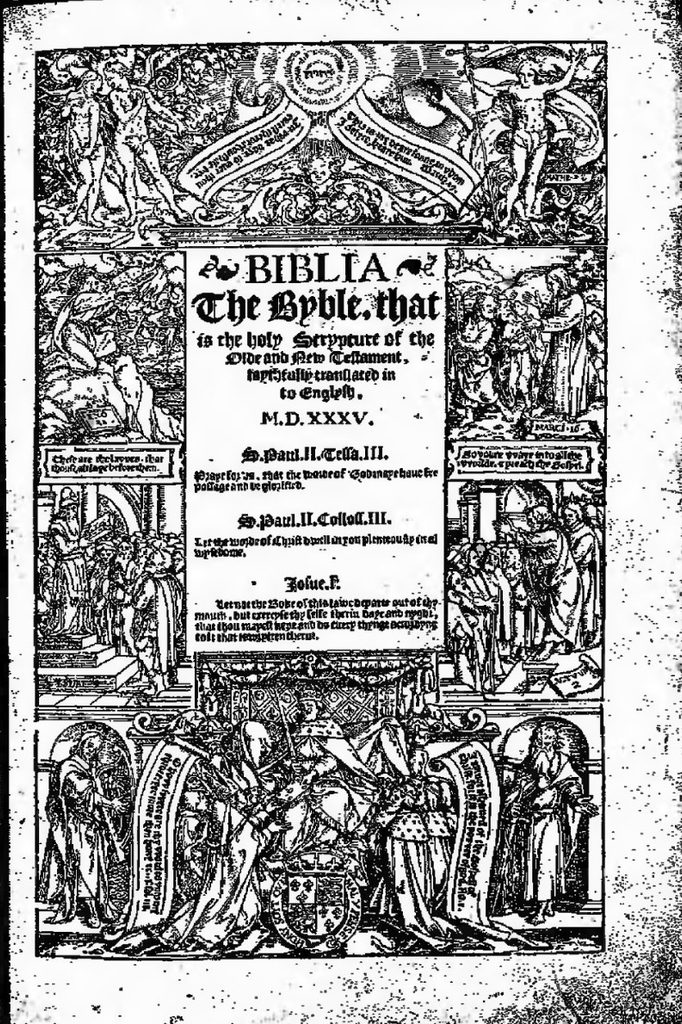
| 1535 | English | Coverdale Bible – This was the first complete English bible translation and uses Lord as a replacement for the Divine Name. Study Light .org |
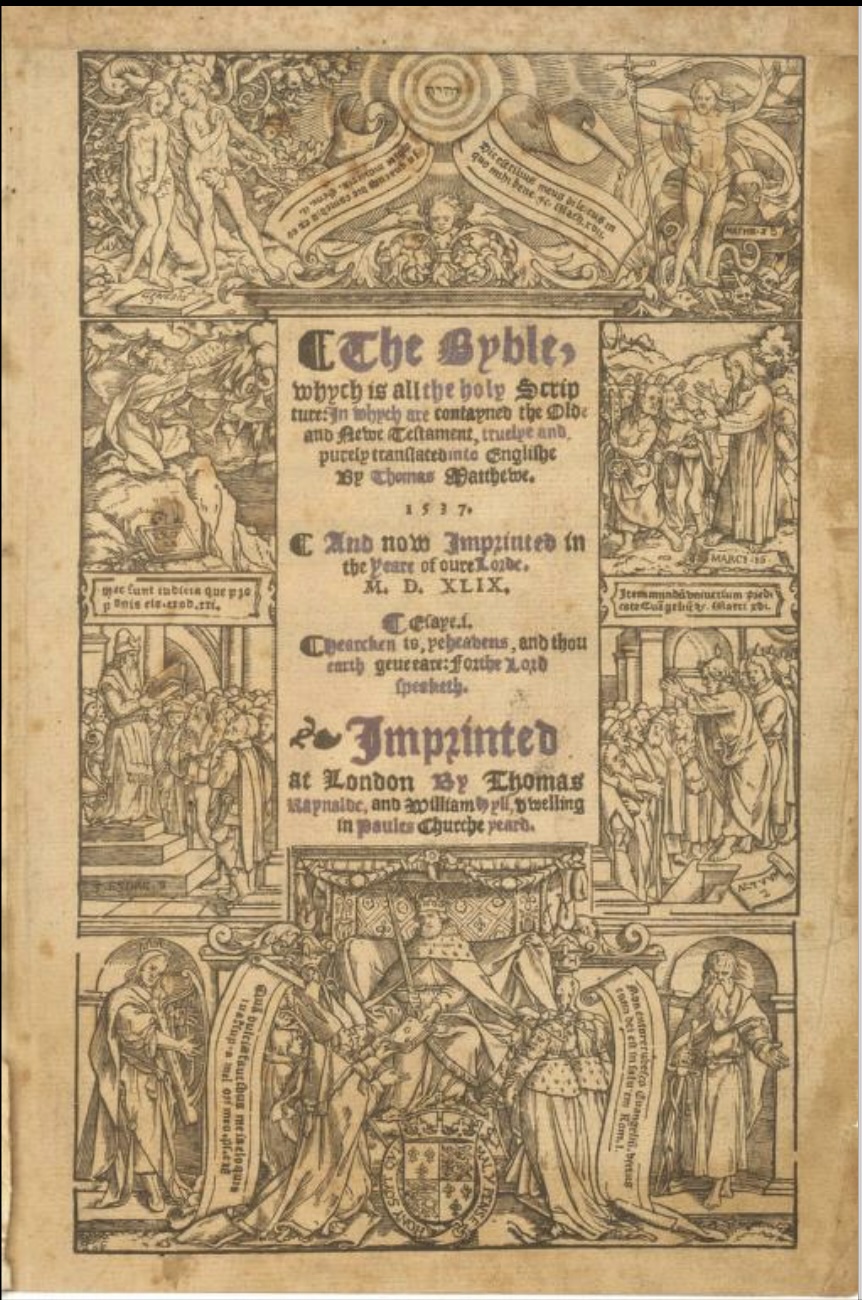
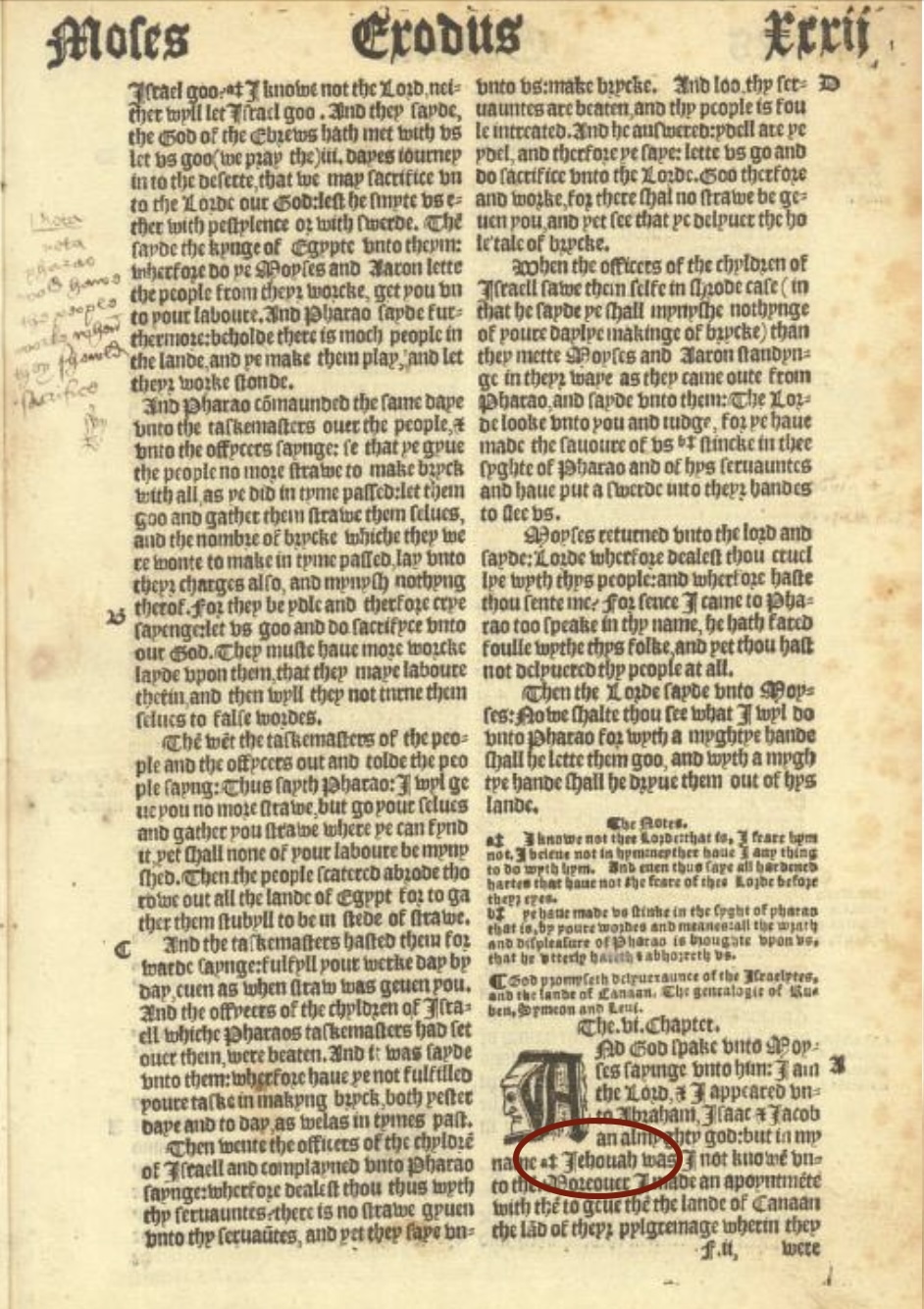
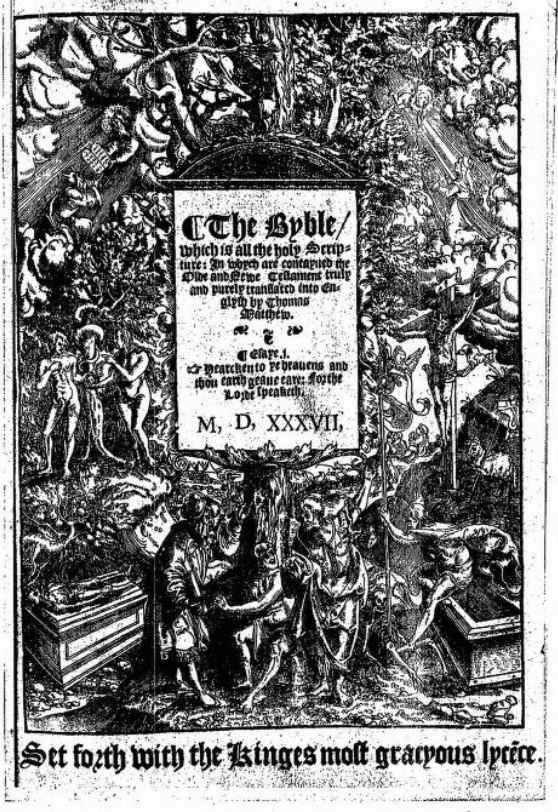
| 1537 | English | Matthew Bible – Used the Divine Name Iehouah 6 times. 1525 New Testament |
| 1539 | English | Taverner’s Bible – This Bible did not use the Divine Name. Facsimile Text |
| 1539 | English | Great Bible – This Bible only uses the Divine Name 3 times: Ps 33:12, Ps 83:18, & Gen 22:14. |
| 1547 | Latin | Leuven Vulgate – This was the first standardized version of the Latin Vulgate until 1590. |
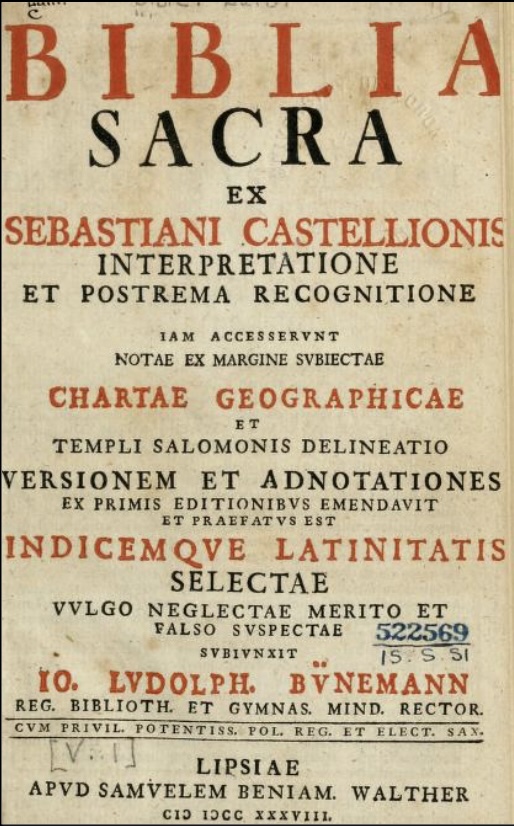
| 1555 | Latin | Sebastian Castellio (1515 – 1563) – He consistently used Ioua in place of the Tetragrammaton. Later editions spelled it Jova. Internet Archive Castellio Bible |
| 1560 | English | Geneva Bible used Iehouah 7 times as a personal name and 2 times as a compound place name. |
| 1568 | English | Bishops’ Bible – It was revised in 1572. The 1602 edition was used as a base text for the King James Bible. |
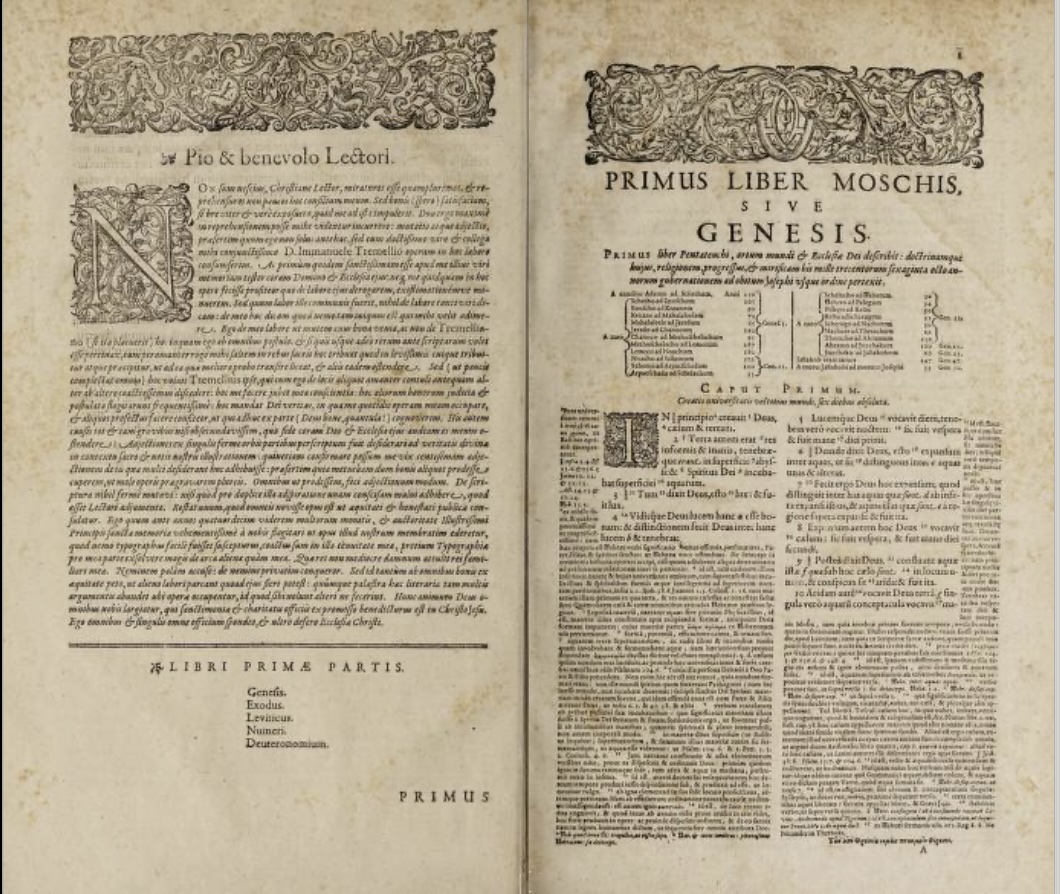
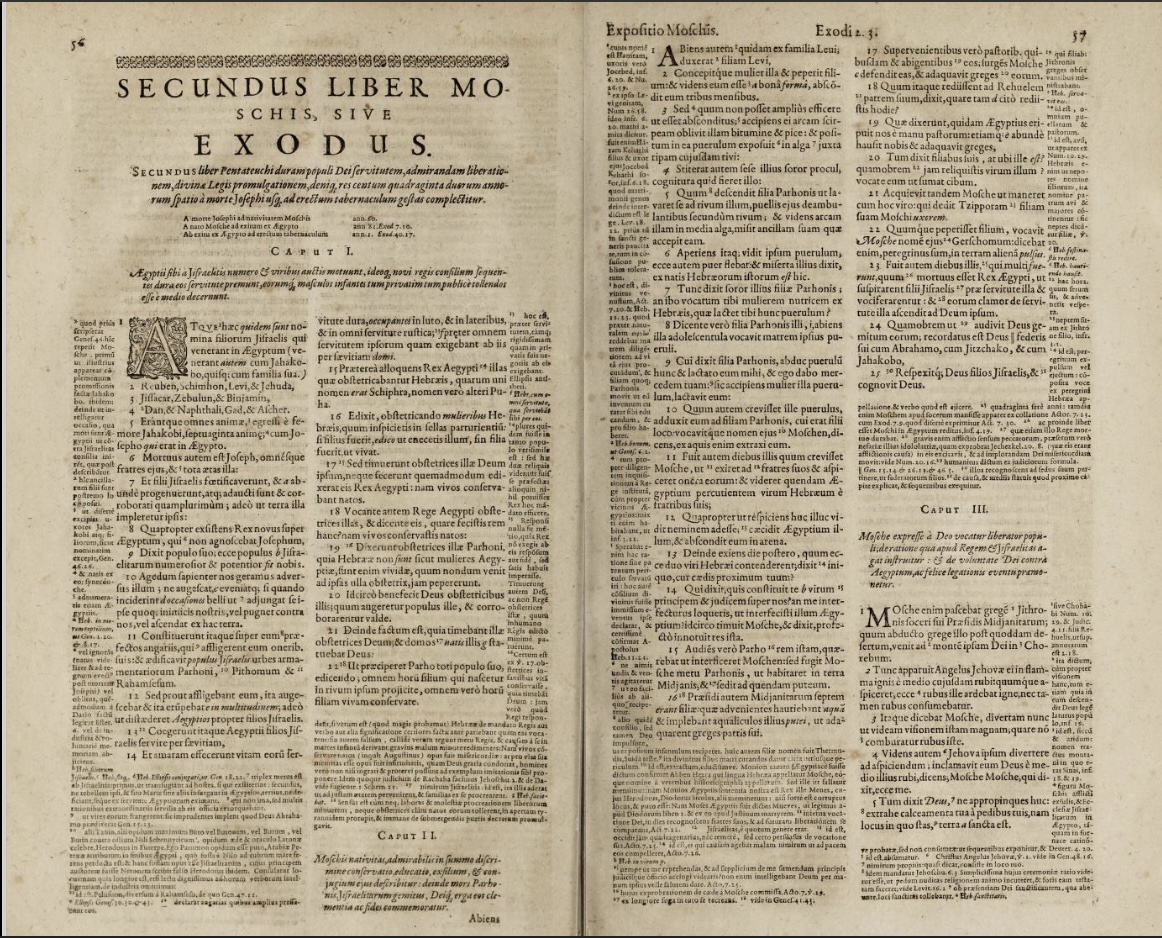
| 1580 | Latin | Immanuel Tremellius (1515 – 1590) Tremellio and Francisco Junio produced the entire Bible about 1580. They consistently used Iehova in place of the Tetragrammaton. Internet Archive Davenant Institute |
| 1590 | Latin | Sixtine Vulgate – The first version authorized by the Pope and remained in use until 1592. |
| 1592 | Latin | Sixto-Clementine Vulgate – The second version authorized by the Pope and remained in use until 1979. |


William Tyndale (~1494 – 1536)
William Tyndale was the first person to translate the Divine Name as Iehouah in English. He used it at least four (perhaps 9) times in his marginal notes. Apparently, he did not use it in the main text. Following his death, several translations based on his work were produced, namely: Coverdale, Matthew, Traverner, and the Great Bible.
Unfortunately, most of Tyndale’s translation of the Old Testament has been lost.
Tyndale was not the first to attempt a vocalization of the Divine Name. This had been done in the 13th and 14th centuries in mainland Europe.
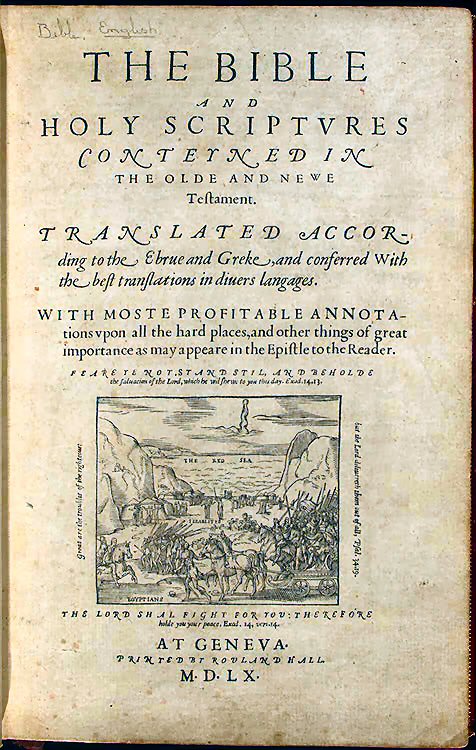
Sebastian Münster (1488 – 1552)
Münster believed that the Tetragrammaton was a proper name and not a title. He also believed that the vowel points associated with it were an aid to pronunciation, although modern scholars do not believe this to be the case. He is largely regarded for his contribution to cartography.
He produced a Latin Translation of the Biblia Hebraica in 1534-1535 which occasionally used Iehovah. In 1546 he produced an expanded version. These influenced later Protestant versions.
The National Library of Israel has a free downloadable copy.

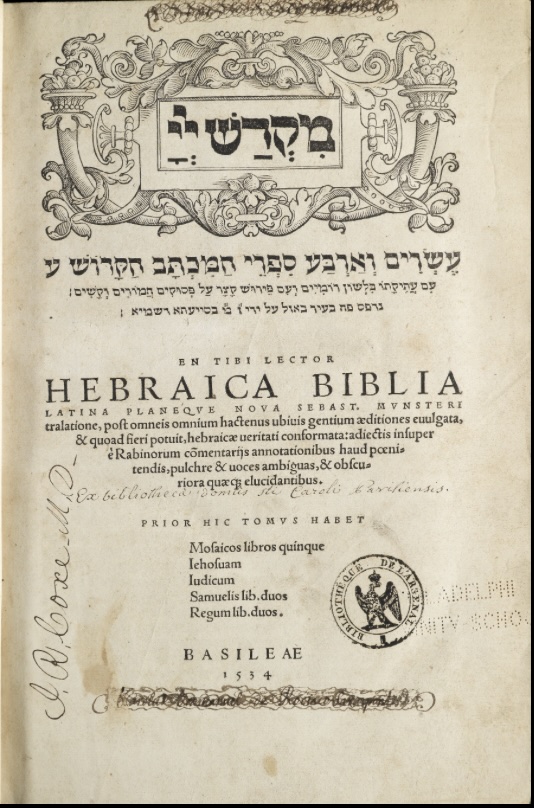

Geneva Bible (1560)
The Geneva Bible was not the work of a single translator, but rather a group, including: Anthony Giby, Thomas Sampson, Myles Coverdale, William Cole and William Keithe.
The Divine Name appears 7 times as Iehouah and 2 times as a compound place name.
Sebastian Castellio (1515 – 1563)
Castellio lived during the French Inquisition and translated the Bible into Latin in 1551 and French in 1555. He transliterated the Divine Name as IOUA at least 1700 times. In later printings, this was changed to Jova because he favoured phonetic adaption over transliteration. He may have been the first person to consistently transliterate the Tetragrammaton into Latin. He also regarded it as a first declension masculine proper noun, hence declinable.
In his French translation, he did not use a transliteration or a phonetic adaption but rather used l’Éternel as a replacement. This practice still dominates French Bibles today. However some modern French Bibles use Yahweh.
After his death, his body was exhumed, burned, and his ashes scattered.
| Declension | Spelling |
|---|---|
| Nominative | Jova |
| Genitive | Jovae |
| Dative | Jovae |
| Vocative | Jova |
| Ablative | Jovȃ |
| Accusative | Jovam |
Giovanni Emmanuele Tremellio (1510 – 1590)
In Latin, his name is spelled Ioannes Immanuel Tremellius. After his conversion to Christianity, he was given the name Abraham, consequently some Bibles use the contraction Ab for his first name. The translation he produced, along with Francisco Junio, was published in 5 parts from 1575 – 1579 in Frankfurt. It was later published as a single volume in London in 1580.
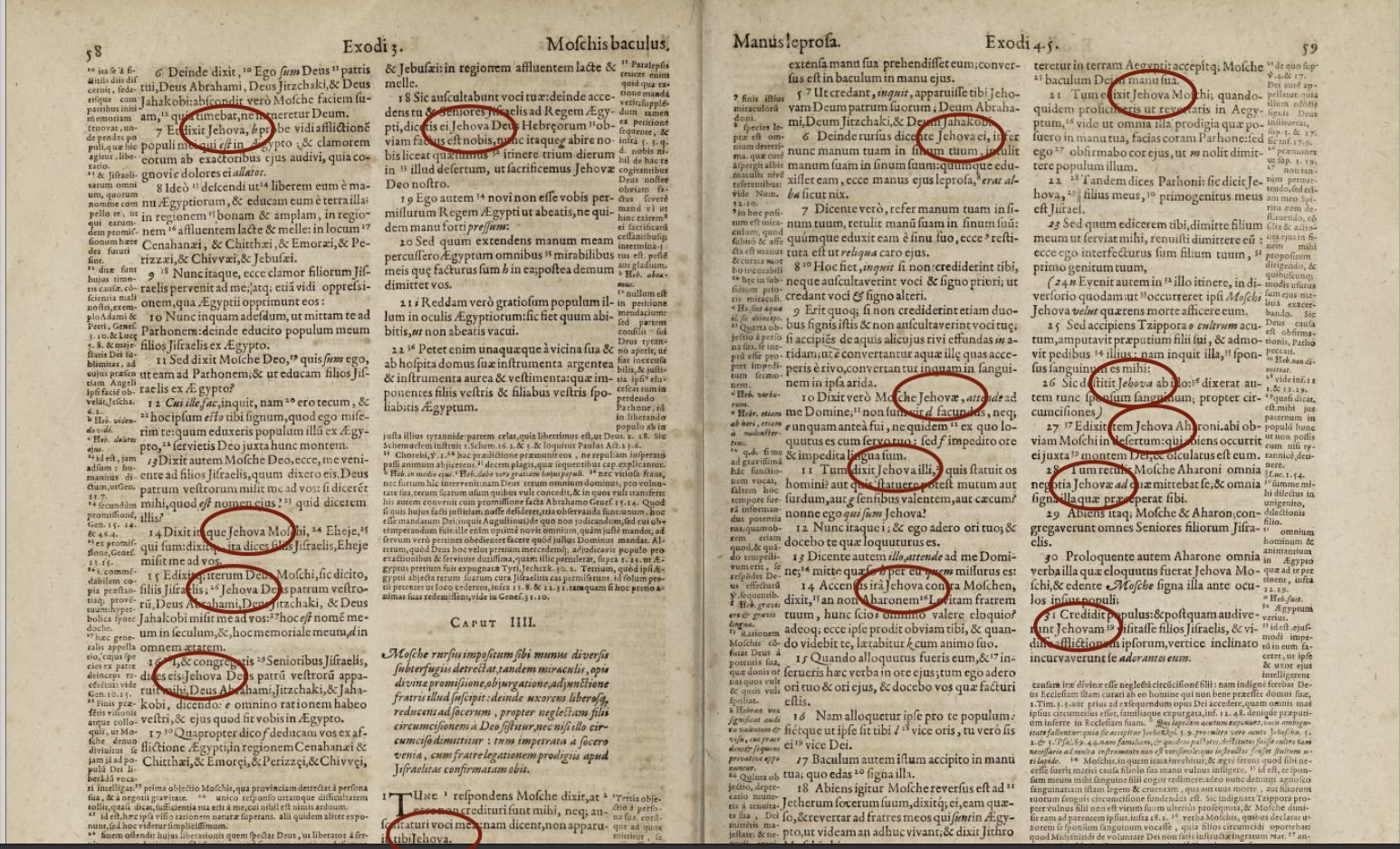
The1585 printing was produced along with copious commentary/notes. They followed Tyndale’s example, and used Iehova for the Tetragrammaton. But unlike most previous translators, they employed it nearly 7000 times in the Old Testament.
| Declension | English Printing | European Printing |
|---|---|---|
| Nominative | Jehova | Iehova |
| Genitive | Jehovae | Iehovae |
| Dative | Jehovae | Iehovae |
| Vocative | Jehova | Iehovah |
| Ablative | Jehova | Iehovȃ |
| Accusative | Jehovam | Iehovam |
| Irregular Latinizations | Jehovi | Iehovi |
Some Latin translators regarded the Divine Name indeclinable, regarding it essentially as a fixed foreign word. However, Tremellio, like Castellio, regarded it as a first declension singular masculine proper noun. Consequently, it has a number of different spellings, depending on the case.
Tremellio’s translation printed in England used Jehova while copies printed in continental Europe did not introduce the letter J until much later.
Casiodoro de Reina (~1520 – 1594)
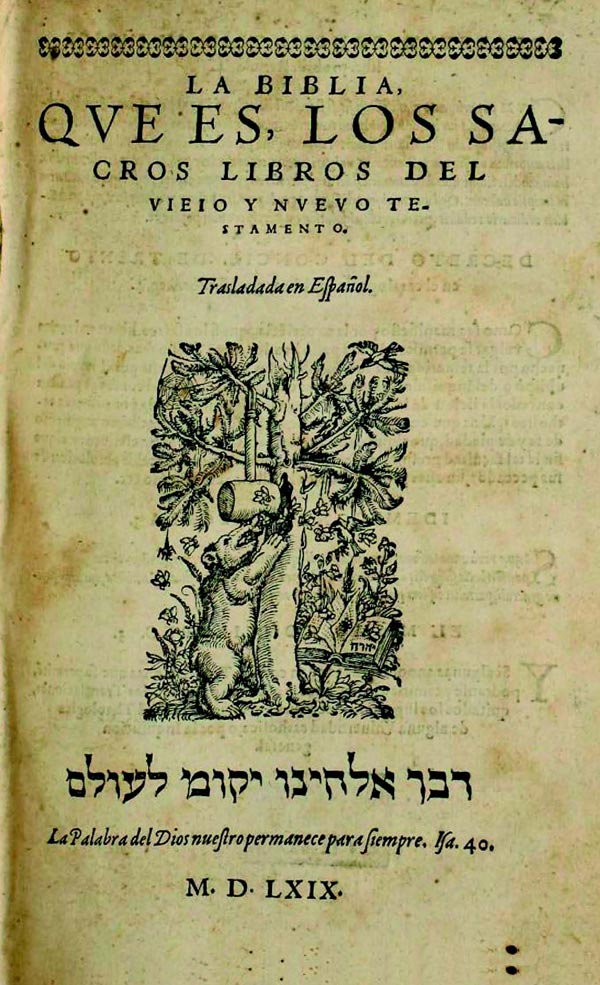
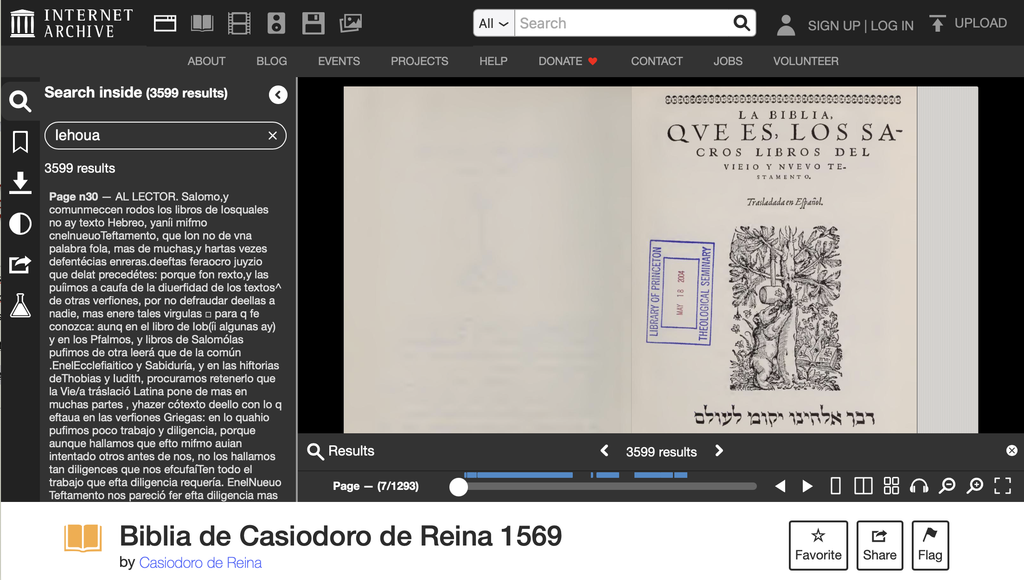
Casiodoro de Reina translated the Bible into Spanish in 1569. He translated the Divine Name as Iehoua more than 3500 times in the Hebrew Scriptures. This appears to be the first time that the Divine Name, Iehoua, was consistently used in a modern European language.
17th Century
Sebastian Schmidt (1617 – 1696)
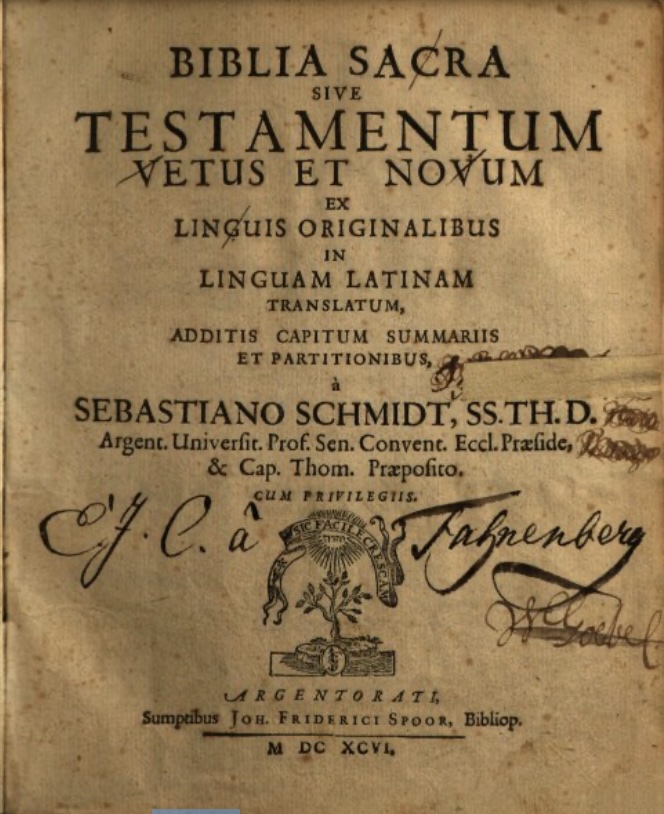
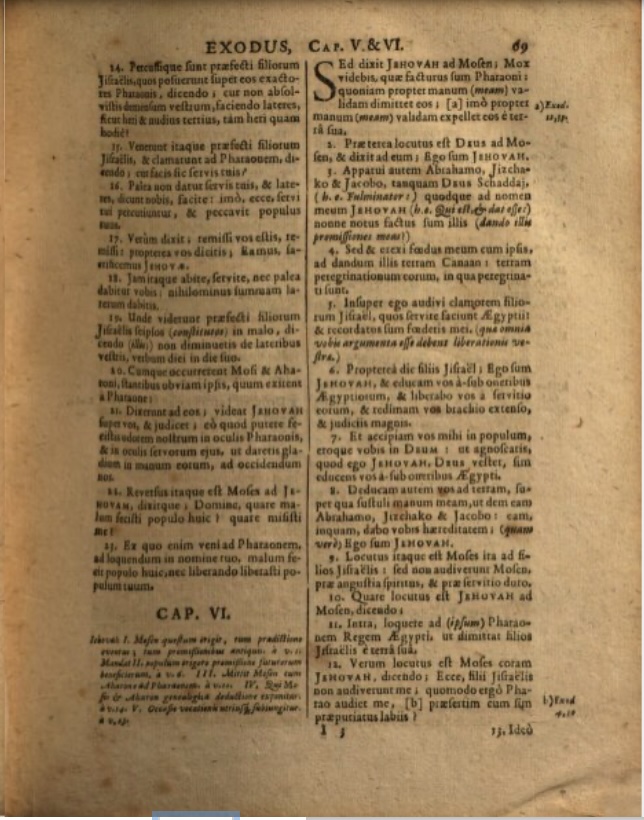
Schmidt was the foremost Lutheran Hebrew scholar and the only one who translated the entire Biblia Hebraica into Latin. He translated the Divine Name consistently as Jehovah.
| Date | Language | Comments |
|---|---|---|
| 1611 | English | King James Bible used Jehovah 4 times. |
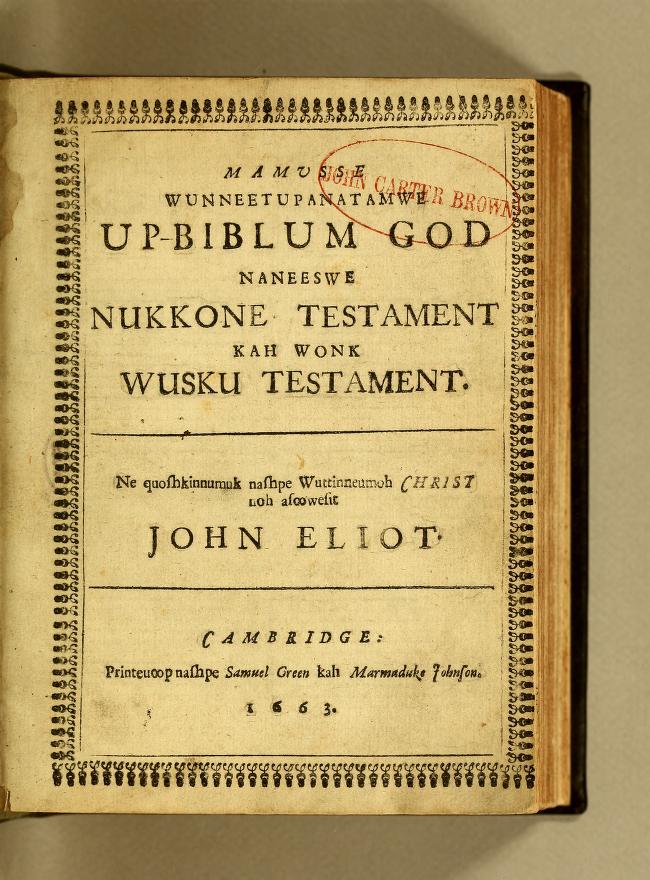
| 1663 | Algonquin | James Eliot Indian Bible used Jehovah throughout the OT and in a few paces in the NT |
| 1696 | Latin | Sebastian Schmidt (1617 – 1696) used Jehovah in place of the Tetragrammaton. Christian Culture Munich Digitization Center |
King James Bible (1611)
The King James Bible was translated by a committee rather than a single person.
The KJV of 1611 included 39 books from the OT, 27 books from the NT, and 14 books of the apocrypha. Many modern copies do not include the apocrypha.
John Eliot (1604 – 1690)
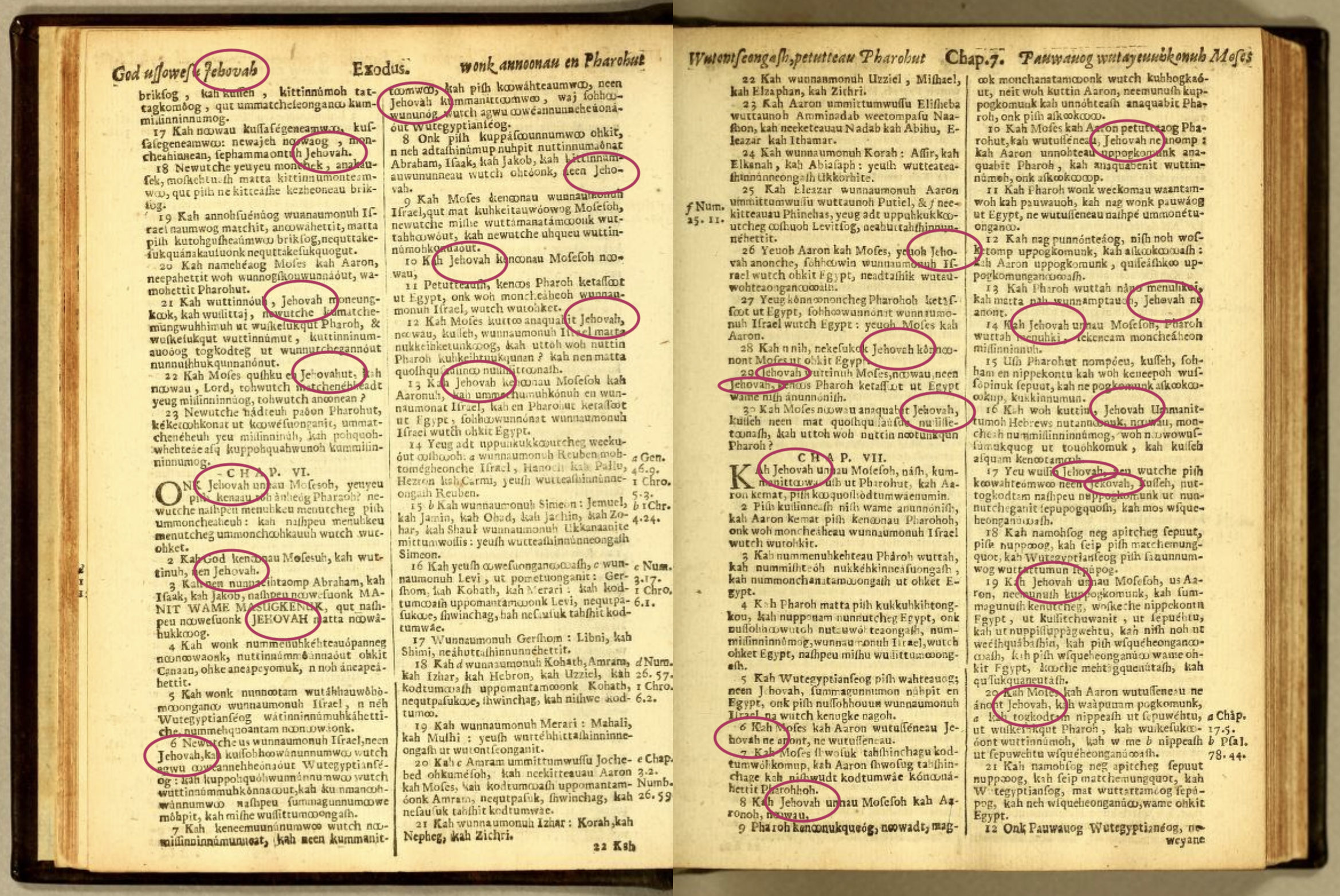
In 1661 John Eliot translated the English Bible ‘New Testament’ into an Algonquin dialect, using the Latin alphabet. It’s most notable characteristic is the use of Jehovah a total of 38 times.
In the 1680 (NT) edition, Jehovah was replaced by LORD except at Matt 4:10, 21:9 & 22:37.
Jehovah is used throughout the Hebrew Scriptures in both the 1663 and 1685 editions of the Bible. This is particularly noteworthy because English translations avoided its usage. However, Tremmelio’s Latin translation used it the nearly 7000 times it appears in the Hebrew.
Other Writers
A number of theologians recognized the importance of the Divine Name but did not make much use of it.
| Author | Writing | Comments |
|---|---|---|
| Michael Servitus | 1531 De Trinitatis Erroribus | Used Ioua in his argument against the Trinity. |
| Martin Bucer | Enarrationes in Psalmos (Commentaries on the Psalms) | Iehovah appears as a philological gloss, not as a replacement in the running text. |
| Sebastian Schmidt 1617 – 1696 | Biblia Sacra sive Testamentum Vetus et Novum. Strassburg: Spoor, 1696. He used Jehovah in place of the Tetragrammaton. Christian Culture Munich Digitization Center |
18th Century
Experience Mayhew (1673 – 1758)
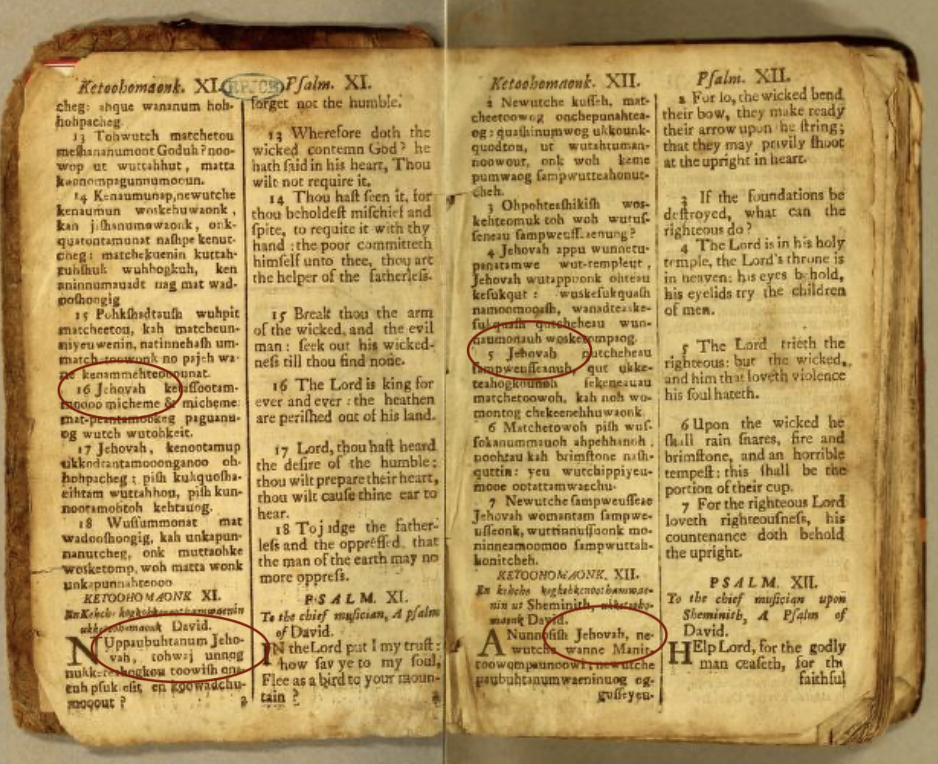
He was a missionary to the Wampanoag Indians at Martha’s Vineyard. His 1709 Massachusett Psalter used the name Jehovah. He based his work on John Eliot’s Bible.
Edward Harwood (1729 – 1794)
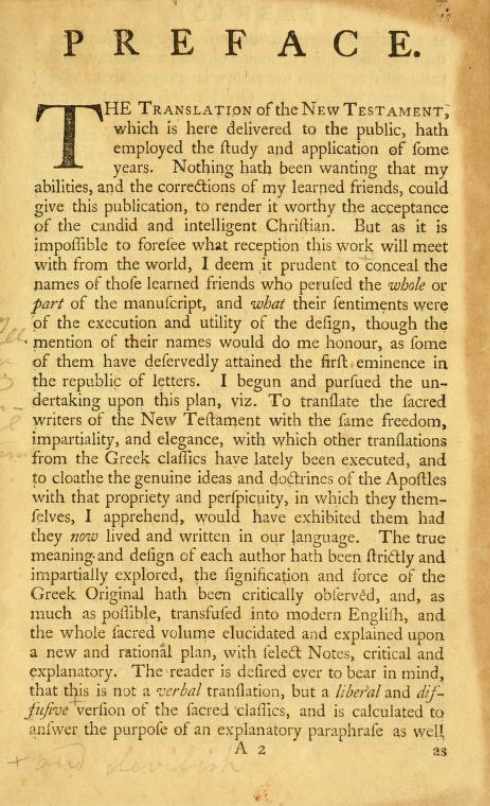
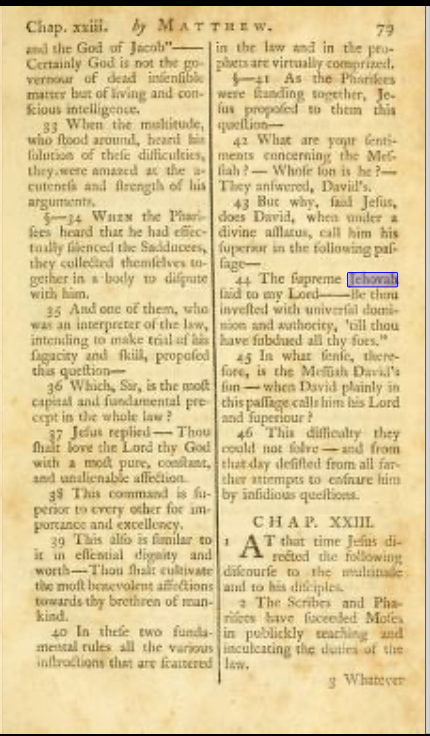
In 1768 he printed the Liberal Translation of the New Testament and used Jehovah 7 times.
Robert Lowth
19th Century
Robert Young (1822 – 1888)
Helen Spurrell (1819 – 1891)
She is considered to be the first woman to translate the OT into English.
John Nelson Darby (1800 – 1882)
Julia Evelina Smith (1792 – 1886)
She is considered to be the first woman to translate the complete Bible in 1876 and used Jehovah in the OT.
In 1885 she published the first OT translation by a woman and used Jehovah throughout.